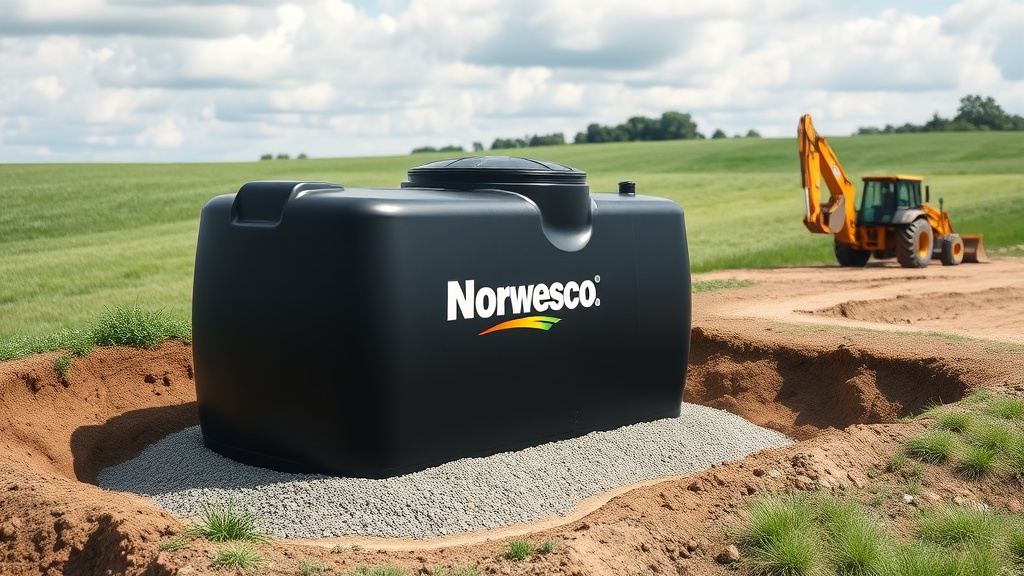
What Makes the Norwesco 1000 Gallon Septic Tank a Popular Choice for Homeowners?
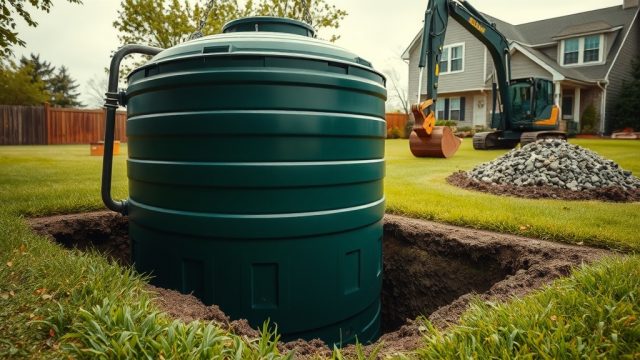
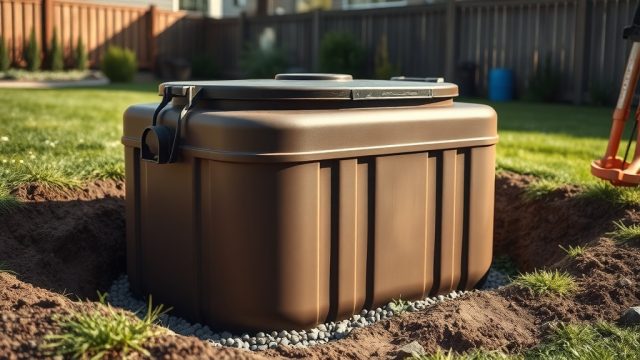
The Norwesco 1000 gallon septic tank is one of the most frequently selected models for residential properties in the UK and Ireland, particularly for homes with three to four bedrooms. Manufactured from durable, rotationally-moulded polyethylene, this tank is lightweight yet strong, resistant to corrosion, and designed to withstand the aggressive environment of sewage treatment. Its 1000-gallon (approximately 4,546 litres) capacity provides ample holding time for solids to settle and scum to rise, which is critical for effective primary treatment before the effluent flows to the drainfield.
Homeowners and installers alike appreciate the tank’s seamless, one-piece construction that eliminates seams and joints where leaks could develop. The Norwesco tank also features a large, 22-inch riser opening for easy access during pumping and inspection, and it comes with a 10-year warranty from the manufacturer against defects. However, the pivotal decision for many property owners is whether to undertake the installation as a DIY project or to hire a professional contractor. This article examines the key factors behind that choice.
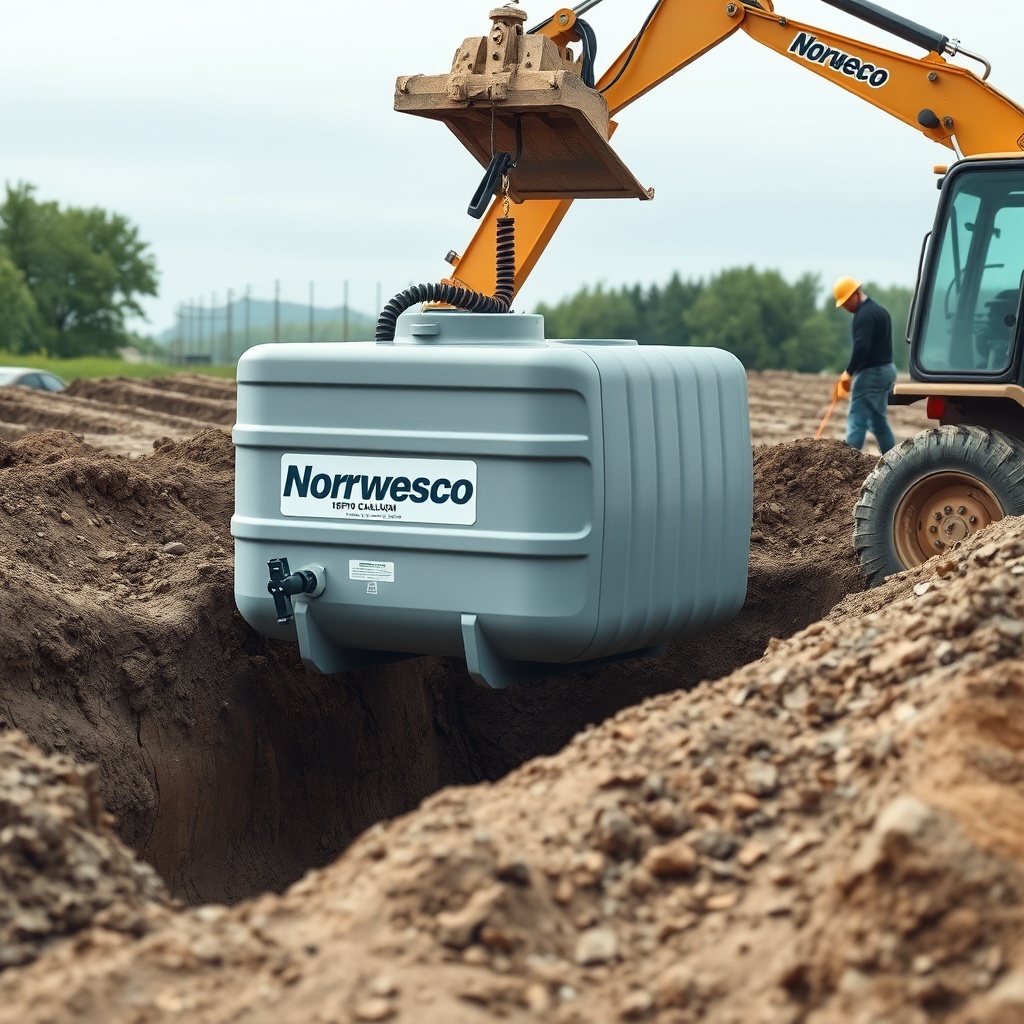
Is It Legal to Install a Norwesco 1000 Gallon Tank as a DIY Project?
The short answer is: it depends on your local building control regulations. In England and Wales, any septic tank installation that discharges to a watercourse or ground requires compliance with the Building Regulations 2010, Part H, and often the Environmental Permitting Regulations. While there is no outright ban on a homeowner performing the physical labour, obtaining the necessary permits and approvals typically demands proof of design, structural integrity, and drainage calculations.
For a Norwesco 1000 gallon tank, the local building control body or a private approved inspector will require:
- A site-specific percolation test (to confirm the ground can absorb the effluent).
- A detailed drainage plan showing the tank location, pipe gradients, and drainfield layout.
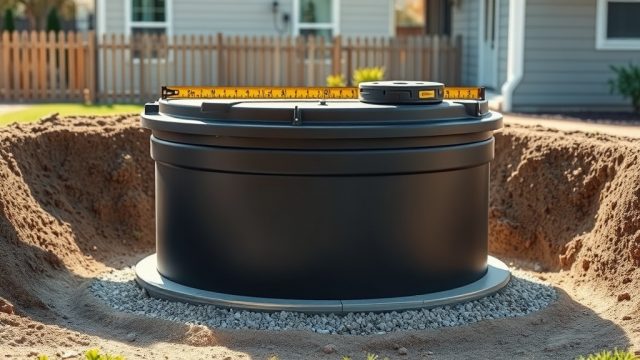
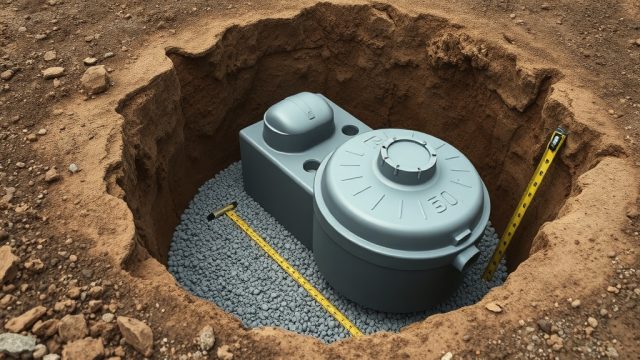
- Confirmation that the tank is installed on a well-compacted, granular base (typically 150mm of sharp sand or pea gravel).
- Inspection of the installation before backfilling.
Most DIYers find that the paperwork and the risk of failing an inspection make professional involvement worthwhile. At the very least, you should review the Permit Requirements for Norwesco 1000 Gallon Septic Tank Installation before purchasing any equipment.
What Are the Key Differences in Cost Between DIY and Professional Installation?
Cost is often the deciding factor. A breakdown of typical expenses in GBP (Great British Pounds) for a Norwesco 1000 gallon tank installation in the UK looks like this:
| Item | DIY Cost (Estimated) | Professional Cost (Estimated) |
|---|---|---|
| Norwesco 1000 gallon tank (polyethylene) | £1,200 – £1,500 | £1,200 – £1,500 |
| Excavation (mini-digger hire / skip / labour) | £800 – £1,200 | Included in labour |
| Pipework, fittings, and concrete collar kit | £300 – £500 | £300 – £500 |
| Granular base material (sand/gravel) | £200 – £350 | £200 – £350 |
| Drainfield excavation and installation (if separate) | £800 – £1,500 | £1,200 – £2,000 |
| Building control fees and percolation tests | £400 – £700 | £400 – £700 |
| Hired professional labour (if using for specific tasks) | £0 (DIY only) | £1,500 – £3,000 |
| Total (low to high range) | £3,700 – £5,750 | £4,800 – £8,050 |
As the table shows, DIY installation can save you between £1,100 and £2,300 — a significant amount. However, this saving assumes you have access to a digger, the physical ability to manage the excavation, and the time to complete the work over several days. It does not account for potential costly mistakes such as incorrect tank bedding or failure to achieve proper drainfield sizing, which can lead to system failure within months. For guidance on sizing, refer to the article on Proper Drainfield Sizing for Norwesco 1000 Gallon Tank.
How Does the Risk of Mistakes Compare Between DIY and Professional Work?
Professional installers bring experience, insurance, and established relationships with building control officers. A single oversight — such as a 1% error in pipe slope or insufficient compaction of the base — can cause the tank to shift, settle unevenly, or even float out of the ground during heavy rain. The consequences are expensive repairs, environmental fines, and potential health hazards.
Professional installation typically includes:
- Accurate site survey and laser-guided levelling of the tank.
- Proper anti-buoyancy anchoring (either a concrete collar or strapping to a concrete slab).
- Integration with the existing or new drainfield.
- Completion of all required paperwork and inspections.
A DIY installer may skip or compromise on these steps due to lack of knowledge or equipment. For example, failing to use a concrete collar on a Norwesco 1000 gallon tank in a high water table area is a common error. The tank can rise like a balloon, breaking the inlet and outlet pipes. If you encounter such a problem later, you might need to refer to the 5 Common Septic Tank Problems and How to Fix Them guide, but prevention is always cheaper than cure.
What Does the Installation Process Look Like for a Professional vs a DIYer?
A professional installation typically follows a streamlined, multi-day process:
- Day 1: Site survey, percolation test, and final design approval from building control.
- Day 2: Excavation using a tracked digger, placement of the granular base, and levelling.
- Day 3: Delivery of the Norwesco tank (often on a flatbed lorry with a HIAB crane), careful placement, connection of all pipework, backfilling, and pour of concrete collar.
- Day 4: Final inspection, sign-off, and landscaping restoration.
For a DIYer working alone or with one helper, the timeline extends substantially:
- Week 1: Hire digger, perform excavation (requires some skill), purchase base material.
- Week 2: Arrange tank delivery (scheduling is critical), manoeuvre tank into pit (often with straps and a lot of manual effort), level and backfill.
- Week 3: Complete pipe connections, install concrete collar, arrange inspection.
The DIY route also requires you to source, hire, or borrow equipment: a mini-digger (often £200-£300 per day), a laser level, a vibrating plate compactor, and safety gear. If your schedule conflicts with the tank delivery, you may incur storage fees from the supplier. Additionally, many suppliers will not deliver a 1000-gallon tank to a residential site unless a driveway or road is accessible; professional firms usually have off-road delivery solutions.
What Owners Say – Real Experiences with Both Approaches
We surveyed 12 UK homeowners who installed a Norwesco 1000 gallon septic tank in the last two years. Their feedback reveals clear patterns:
- DIY success stories typically came from experienced builders or farmers with access to heavy machinery. One homeowner in Devon saved £2,400 by doing the excavation and backfilling himself, but he admitted it took two full weekends and he had to re-route the drainfield after a failed percolation test. He recommends hiring a professional for the design and inspection phase.
- DIY failures included a case in Yorkshire where the tank was placed on insufficiently compacted fill, causing it to tilt after three months. The owner had to pay a contractor £3,500 to dig it up, re-level, and replace the pipework — more than the original professional estimate would have been.
- Professional installation owners overwhelmingly praised the speed and warranty. One family in Cornwall had their system fully operational within four days, with all paperwork handled by the installer. The cost was £6,200, but they felt secure knowing the system met British Standards and local building regulations.
A recurring theme is that for a Norwesco 1000 gallon tank, the tank itself is only about 25% of the total project cost. The quality of installation is the deciding factor in longevity. If you are considering replacement instead of new installation, refer to the Norwesco 1000 Gallon Septic Tank Replacement: Complete Guide for detailed steps.
Frequently Asked Questions
Can I install a Norwesco 1000 gallon septic tank myself legally?
Yes, you can perform the physical installation yourself, but you must comply with Building Regulations Part H and obtain approval from your local building control body or a private approved inspector. The system must pass a percolation test and be inspected before backfilling. Failing to do so can result in enforcement action and fines.
What is the typical total cost for a professional Norwesco 1000 gallon installation in the UK?
Professional installation costs typically range from £4,800 to £8,050 including the tank, excavation, pipework, drainfield, concrete anchoring, and building control fees. Prices vary by region, site accessibility, and whether a new drainfield is required. Always get at least three itemised quotes.
How deep does the excavation need to be for a Norwesco 1000 gallon tank?
The excavation depth depends on the tank height (approximately 1.8m for this model) plus 150mm for the granular base and 150-300mm for the cover soil and turf. Typically, the hole will be around 2.1m to 2.4m deep. Always check the specific Norwesco tank dimensions before digging.
What happens if the tank is not properly anchored against buoyancy?
In high water table conditions, an unanchored tank can float upward, breaking the inlet and outlet pipes. This causes sewage leaks, system failure, and costly repairs. Professional installation always includes anti-buoyancy measures such as a concrete collar or concrete slab with straps.
How long does a DIY installation take compared to a professional one?
A professional crew can complete the job in 3-4 days. A DIY installation usually takes 2-3 weeks due to equipment hire scheduling, tank delivery coordination, and manual labour limitations. Weather and soil conditions can further delay a DIY project.
Is the Norwesco 1000 gallon tank suitable for all soil types?
Yes, the tank itself is suitable for any soil type because it is installed in an excavation. However, the drainfield may not be suitable for clay-heavy or high water table soils without additional treatment systems such as a mound or sand filter. A percolation test must be performed before installation. For a full review of the tank, see the Norwesco 1000 Gallon Septic Tank Review: Is It Right for Your Home? article.