
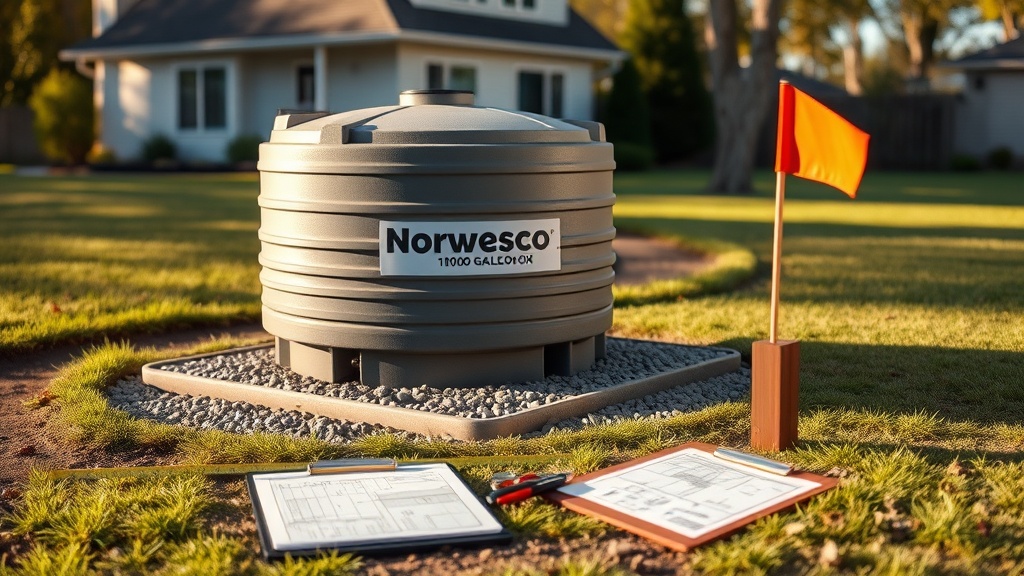
Permit Requirements for Norwesco 1000 Gallon Septic Tank Installation
Installing a Norwesco 1000 gallon septic tank is not a weekend DIY project; it’s a regulated construction activity that demands proper permits, soil tests, and inspections. Without the right paperwork, you risk fines, failed inspections, and even having to dig up and move a tank that cost you thousands. This guide walks you through exactly what permits are needed, how the process unfolds, and what to watch for with this specific tank model.
Do I Need a Permit for a Norwesco 1000 Gallon Septic Tank?
Yes, absolutely. Every county and municipality in the United States requires a permit for a new septic system installation, including a replacement tank of this size. A Norwesco 1000 gallon tank is considered a major component, and local health departments treat it as such. The permit typically covers the tank itself, the drainfield, and any soil treatment areas. Skipping the permit can result in penalties ranging from $500 to $10,000, plus the cost of removing a non-compliant installation. Always check with your local health department or environmental health office before buying the tank.
Most jurisdictions have a two-step process: a preliminary soil evaluation and a final construction permit. The Norwesco 1000 gallon septic tank must be placed on a level, compacted base, and the permit application usually requires a site plan showing the tank’s location relative to wells, property lines, and buildings. Expect to pay between $200 and $800 for a standard residential permit, though large systems may cost more.
What Soil Tests Are Required Before Installing a Norwesco 1000 Gallon Tank?
Before you can get a permit, most health departments require a percolation test (perc test) or a deep hole soil analysis. The Norwesco 1000 gallon septic tank is designed for residential use, and the soil must be able to handle effluent discharge from a tank of this size. Typically, you need a perc rate between 1 and 60 minutes per inch. If your soil is too slow (clay) or too fast (gravel), you may need an engineered system, which adds cost.
Typical Soil Test Requirements
| Soil Characteristic | Acceptable Range for Norwesco 1000 Gal Tank |
|---|---|
| Percolation rate | 1–60 minutes per inch |
| Depth to seasonal high water table | At least 4 feet below the drainfield bottom |
| Depth to bedrock | At least 6 feet below the drainfield bottom |
| Soil texture | Sand, loamy sand, sandy loam (Type 1–3) |
If your soil fails the test, you might need a raised mound system or a sand filter, which can double the total installation cost. Some counties allow a substitute with deeper excavations or special fill, but that requires additional permits. The Norwesco tank itself is fine—it’s the drainfield that needs the right soil.
What Is the Typical Permit Process for a Norwesco 1000 Gallon Tank?
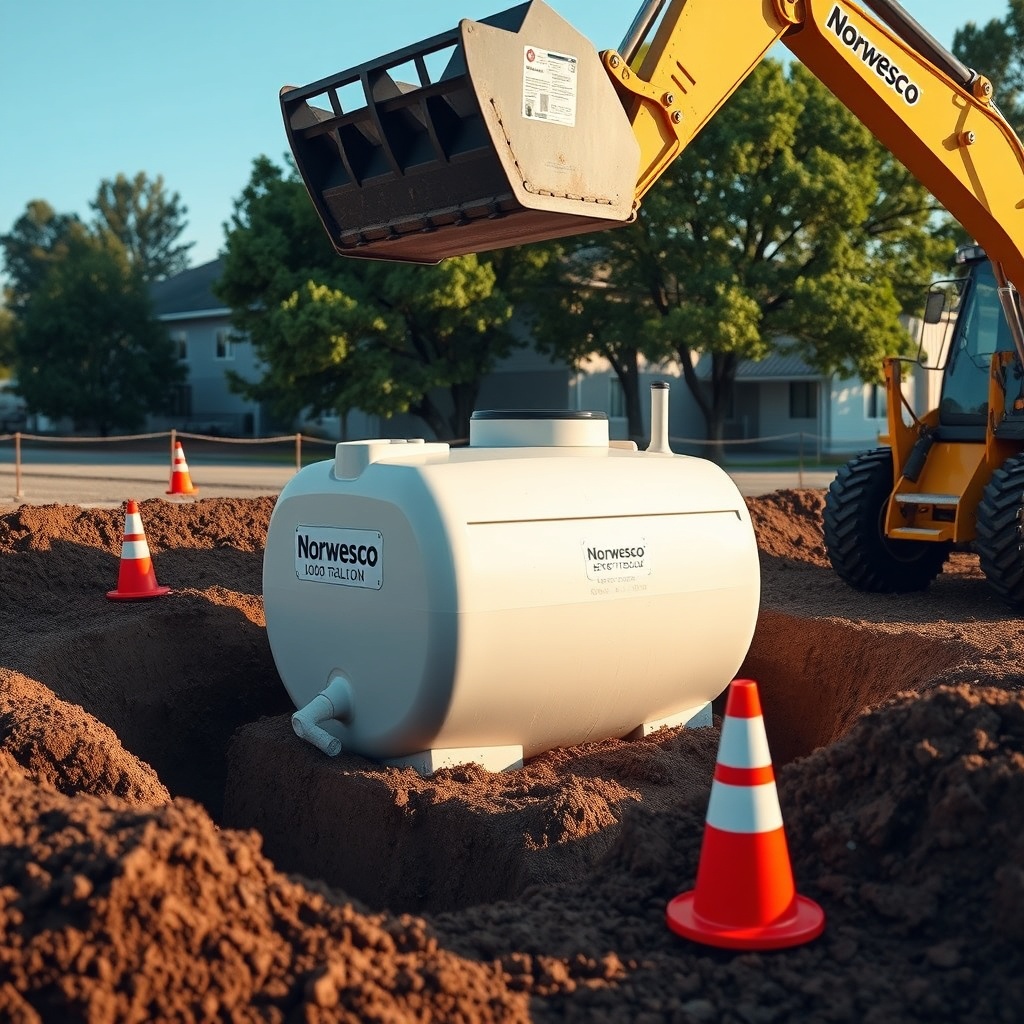
The permit process usually follows this timeline: first, submit a site plan and soil test results to the local health department. They review whether the Norwesco 1000 gallon septic tank fits the property’s layout. If approved, you receive a construction permit, often valid for 6–12 months. You then install the tank and drainfield, calling for inspections at key stages: after excavation, before backfill, and after final grading. The inspector will verify that the tank is set level, that inlet and outlet pipes are correct, and that the tank lid is accessible.
For the Norwesco 1000 gallon septic tank, a common issue is that its dimensions (approximately 91 inches long by 77 inches wide by 58 inches high) require specific clearance for excavation equipment. The permit application must include the tank’s weight (about 1,500 pounds empty) and lifting points. Many counties require a licensed installer to complete the work; doing it yourself may void the permit. Once the system passes, you get a certificate of compliance, which you should keep with your property deed.
How Much Do Permits Cost for a Norwesco 1000 Gallon Septic Tank?
Permit costs vary widely by region, but here are realistic numbers. A basic residential septic permit typically ranges from $300 to $1,200. If you need a soil engineer or perc test specialist, add another $200–$600. For a Norwesco 1000 gallon septic tank, which is a standard size for a 3–4 bedroom home, the permit fee is usually at the lower end of that range. However, if your property requires a variance (e.g., because the tank is too close to a well), expect an additional $100–$500 variance fee.
Don’t forget that the permit cost is separate from the tank price (typically $800–$1,200) and the installation labor ($1,500–$3,000). Some counties charge per inspection—often $50–$150 per visit. To avoid surprises, call your local environmental health office and ask for a fee schedule. The Norwesco tank’s lightweight polyethylene material may slightly reduce transport costs, but permit fees remain the same regardless of tank material.
For more on overall system planning, read our Norwesco 1000 Gallon Septic Tank Review: Is It Right for Your Home?.
What Setbacks and Clearances Are Required for a Norwesco 1000 Gallon Tank?
Local codes mandate specific minimum distances from the tank to various features. For a Norwesco 1000 gallon septic tank, typical setbacks include:
- 10 feet from property lines
- 50 feet from wells (some states require 100 feet)
- 10 feet from building foundations
- 5 feet from any driveway or paved surface
- 25 feet from streams or water bodies
- 2 feet from any retaining wall or slope
If your lot is small, you might need a variance. The Norwesco tank’s shape is rectangular with rounded edges, so you need accurate measurement for setback compliance. The inspector will measure from the outermost part of the tank, including the lid and any attached piping. Failure to meet setbacks is a common reason for permit denial. Plan ahead—sometimes moving the tank a few feet can solve the issue.
For drainfield sizing and layout, refer to our guide on Proper Drainfield Sizing for Norwesco 1000 Gallon Tank.
What Happens If I Install Without a Permit?
Installing a Norwesco 1000 gallon septic tank without a permit is risky. The consequences include: a stop-work order, fines that can range from $500 to $5,000, possible requirement to remove the tank at your expense, and difficulty selling your home. Most real estate transactions require a septic system inspection, and a non-permitted system will likely block the sale. Additionally, insurance may not cover damage from an unpermitted system, leaving you liable for environmental contamination.
Some homeowners attempt to bypass permits by using a “replacement” tank without permits, but that rarely works. The Norwesco 1000 gallon septic tank is a heavy piece of equipment that leaves a footprint—neighbors or inspectors may notice excavation. The smart move is to get the permit upfront. The cost of the permit is a fraction of the potential penalties. If you’re worried about the process, many licensed installers handle permits as part of their service.
What Owners Say
“I thought the permit was just a formality, but the inspector spent 30 minutes checking the tank’s level. Glad I didn’t skip it.” – Tim R., Ohio
“My county required a soil test that came back borderline—needed a bigger drainfield. The Norwesco tank itself wasn’t the issue, but the permit process added two weeks to the timeline.” – Sarah L., North Carolina
“The permit cost $450 here in Texas, but the peace of mind is worth it. Plus, my home insurance won’t cover septic issues without a permit on file.” – Mike D., Texas
Frequently Asked Questions
Do I need a separate permit for the tank and the drainfield?
Usually, one permit covers the entire septic system, including the Norwesco 1000 gallon septic tank and the drainfield. However, some localities issue separate permits for each component, so confirm with your health department.
Can I install the Norwesco 1000 gallon tank myself to save money?
Most states require a licensed installer for any septic tank over 500 gallons. If you do it yourself, you may not pass inspection, and warranty coverage from Norwesco may be void. Check local laws.
How long does the permit approval take?
For a straightforward Norwesco 1000 gallon septic tank installation, permit approval can take 2–6 weeks. If soil tests or variance are needed, expect 8–12 weeks. Many health departments offer expedited service for an extra fee ($100–$200).
Does the tank size affect the permit cost?
No, permit fees are usually based on the system type (e.g., conventional vs. pressurized) and number of bedrooms, not the exact gallon capacity. A Norwesco 1000 gallon tank is standard for a 3-bedroom home and won’t increase permit costs beyond normal.
What if my property fails the soil test?
If the perc test fails, you need an alternative system like a mound or aerobic treatment unit. That requires a different permit and often an engineered design. The Norwesco 1000 gallon septic tank may still be used, but the total system cost will increase significantly.
Can I get a permit retroactively?
Some counties allow a retroactive permit (often called an after-the-fact permit), but it’s more expensive and may require extensive documentation. It’s far better to obtain the permit before installation. Use our guide on 5 Common Septic Tank Problems and How to Fix Them to avoid common mistakes.