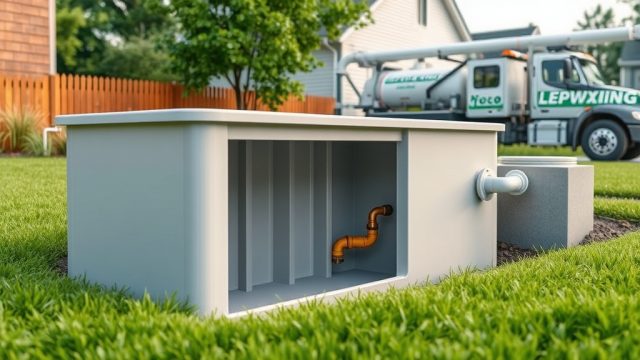
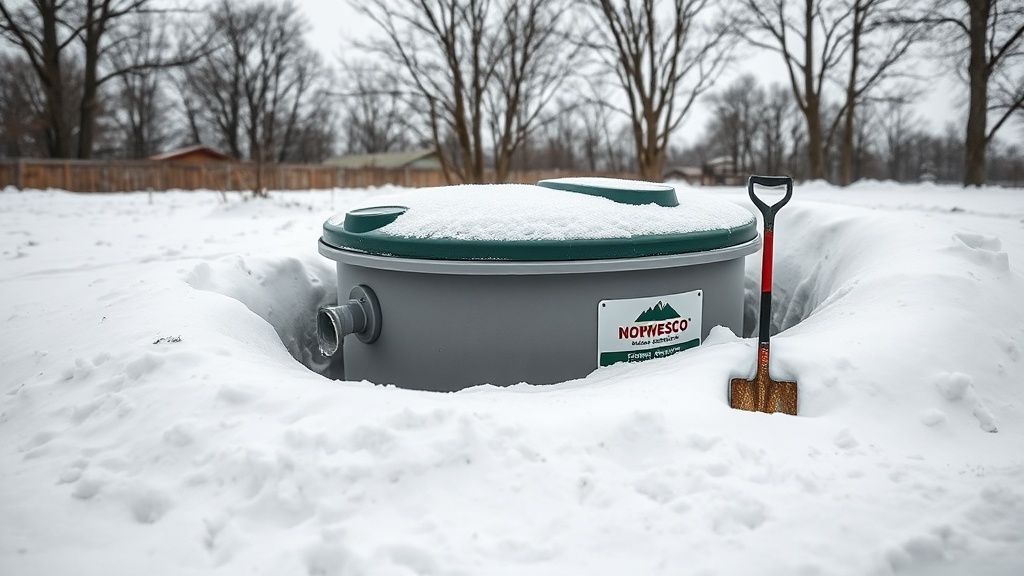
Why Do I Need to Winterize My Norwesco 1000 Gallon Septic Tank?
Winterizing a Norwesco 1000 gallon septic tank is not optional for homeowners in regions where temperatures drop below freezing. The tank itself is made from rotationally molded polyethylene, which is durable and resistant to corrosion, but it does not generate heat. When the ground freezes, the liquid inside the tank can expand, causing the tank walls to crack or the inlet and outlet baffles to break. More importantly, a frozen tank stops all biological treatment. The bacteria that break down solid waste are working in liquid that stays above 32°F only if you maintain proper insulation and usage patterns. Without winterization, you risk an expensive emergency repair or a full replacement costing several thousand dollars.
Frozen septic systems lead to sewage backups into your home, which is unsanitary and can cause structural damage. A single freeze event can destroy the tank’s internal baffles, and repairing those requires excavation. The cost to winterize is negligible compared to the price of a frozen tank failure. This guide covers the specific steps for the Norwesco 1000 gallon tank, including pumping schedules, insulation techniques, and critical do’s and don’ts.
How Often Should I Pump a Norwesco 1000 Gallon Tank Before Winter?
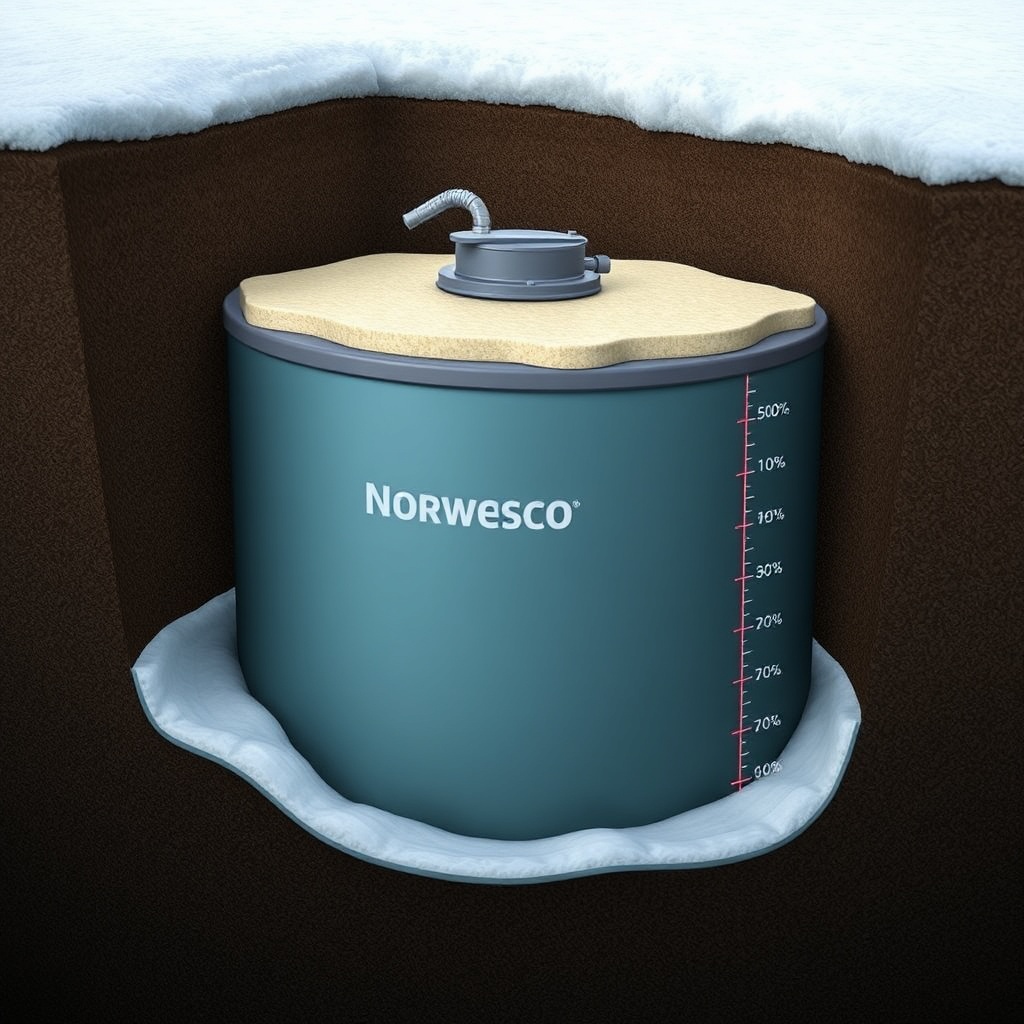
Pumping frequency is the single most important factor in preventing freeze damage. A Norwesco 1000 gallon tank that is too full or too empty both present risks. The ideal liquid level is roughly 12 to 18 inches from the top of the tank, which corresponds to the normal operating level. If you pump it completely dry and leave it empty, the lightweight polyethylene tank can actually heave upward when the ground freezes, shearing the inlet and outlet pipes. Conversely, if the tank is overfull due to heavy usage or a failing drainfield, the liquid can freeze in the upper portion of the tank, cracking the top.
For a household of four people, pump this tank every 3 to 4 years under normal conditions. However, before winter, you should pump it one year earlier than your normal schedule if you have not had it pumped in over two years. The table below outlines the recommended pre-winter pumping intervals based on household size.
| Household Size | Normal Pumping Interval | Pre-Winter Pumping Recommendation | Winter Risk Level |
|---|---|---|---|
| 1–2 people | Every 5–7 years | Pump if 4+ years since last service | Low |
| 3–4 people | Every 3–4 years | Pump if 2+ years since last service | Moderate |
| 5–6 people | Every 2–3 years | Pump if 1+ year since last service | High |
| 7+ people or heavy water use | Every 1–2 years | Pump every year before winter | Very High |
Always have the pumper verify the scum layer thickness and sludge depth. If the scum layer is more than 6 inches thick or the sludge is more than 12 inches deep, it is time to pump regardless of the calendar. A thick scum layer can freeze solid and block the outlet baffle, causing wastewater to back up into your home. For more details on overall tank performance, see our Norwesco 1000 Gallon Septic Tank Review.
What Insulation Is Best for a Norwesco 1000 Gallon Tank?
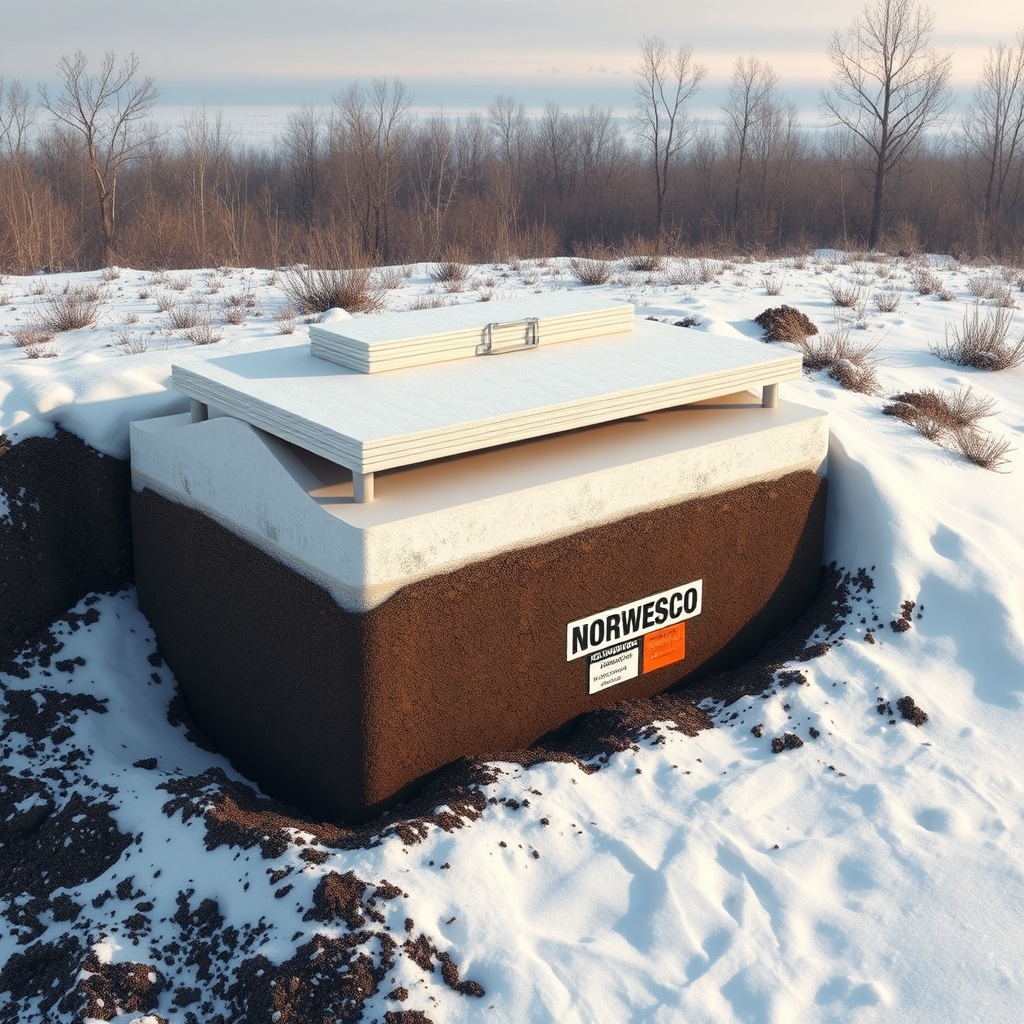
The Norwesco 1000 gallon tank is made of high-density polyethylene (HDPE), which has an R-value of roughly 1 per inch of material. That means the tank wall itself offers almost no insulation. To protect it from freezing, you need to add external insulation. The most effective method is to place rigid foam insulation boards (extruded polystyrene or polyisocyanurate) directly on top of the tank lid and extending at least 2 feet beyond the tank’s perimeter on all sides. A minimum thickness of 2 inches (R-10) is recommended for mild winter zones, but for zones where the ground freezes deeper than 12 inches, use 4 inches (R-20) of insulation.
Cover the insulation with a heavy-duty tarp or 6-mil polyethylene sheeting to keep it dry, then backfill with at least 12 inches of soil. Do not use fiberglass batt insulation—it will absorb moisture and lose all insulating value when wet. Another option is to use spray foam insulation applied directly to the tank lid and risers, but this is more expensive and harder to remove for access. For tanks installed with risers to grade, you must also insulate the riser walls. Wrap risers with closed-cell foam pipe insulation or rigid foam boards secured with duct tape.
If your tank is located in an area with heavy snow cover, you have a natural insulator. Do not remove snow from the area directly above the tank—leave at least 12 inches of snow on top as added insulation. However, do not compact the snow because compacted snow conducts cold better than fluffy snow. For homeowners in extremely cold climates (zones 4 and colder), consider installing a septic tank heating cable. These are thermostatically controlled wires that wrap around the inlet and outlet pipes and the tank walls. They typically cost between $200 and $500 USD, including installation. A simpler and cheaper alternative is to add a layer of straw or hay bales over the insulation, covered with a tarp. Replace the bales every year as they decompose.
Can I Use Additives to Prevent Freezing in My Norwesco Tank?
No. Do not use any chemical additives, antifreeze, or alcohol-based products to lower the freezing point of the liquid in your Norwesco 1000 gallon septic tank. Adding these substances will kill the beneficial bacteria that break down waste, causing the tank to stop treating wastewater. The result is foul odors, clogged pipes, and a drainfield that fails prematurely. The only recommended additive is a biological bacteria booster, but these are for improving digestion, not for freeze prevention.
If you are worried about ice formation in the tank, the solution is proper insulation and maintaining adequate liquid flow. Running a small amount of warm water (such as from a dripping faucet) into the tank on extremely cold nights helps keep the liquid temperature above freezing. But be careful—adding too much water can overload the tank. A controlled drip from a sink or shower that adds 5 to 10 gallons per day is safe. You must ensure that this additional water does not push the tank above its normal operating level. If you have a common septic tank problem like a leaky toilet flapper, fix it before winter because a slow leak adds cold water continuously and can freeze the inlet pipe.
What Are the Critical Do’s and Don’ts When Winterizing My Tank?
- Do have the tank pumped in late autumn, at least one month before the first hard freeze. This allows the system to stabilize and the bacteria to re-establish.
- Do add a layer of rigid foam insulation on top of the tank lid and extend it at least 2 feet beyond the perimeter.
- Do cover the insulation with a waterproof tarp and at least 12 inches of soil or gravel to hold it in place and provide thermal mass.
- Do keep the area around the tank free of heavy vehicles, livestock, or snowplows that can compact the soil and damage the tank or insulation.
- Do run a small amount of warm water through the system on nights when the air temperature drops below -10°F (-23°C).
- Don’t pump the tank completely dry before winter. Leave the normal liquid level of at least 24 inches of liquid in the tank to prevent the tank from floating or heaving.
- Don’t use rock salt, calcium chloride, or any de-icing chemicals near the tank or drainfield. These chemicals can kill plants, contaminate groundwater, and damage the system.
- Don’t park vehicles or place heavy equipment over the tank area during winter. The frozen ground is less able to support weight, and the tank could crack.
- Don’t ignore signs of freezing: gurgling sounds from drains, slow flushing toilets, or sewage odors inside the home. If you notice these, call a professional immediately.
For proper drainfield care during winter, refer to our guide on drainfield sizing to ensure your system is not overloaded. An oversized drainfield is more resistant to freezing because it has more surface area to dissipate heat.
What Do Owners Say About Winterizing Their Norwesco 1000 Gallon Tanks?
Real-world feedback from homeowners across New England, the Midwest, and Canada reveals that winterizing a Norwesco 1000 gallon tank is straightforward but requires diligence. Many owners stress that the tank’s polyethylene construction is a double-edged sword: it will not rust or corrode, but it offers no thermal mass. One owner in Vermont reported that after a winter with no insulation, the tank’s outlet baffle cracked due to ice expansion, requiring a $1,200 USD repair. After adding 4 inches of rigid foam and a heated cable, they had zero issues for the next five years.
Another owner in Minnesota shared that they pump their tank every two years without fail, and they cover the access risers with insulated caps made from foam. They also run a tiny drip from a basement sink during cold snaps. Their system has operated for 12 years without a freeze. In contrast, a homeowner in Wisconsin who pumped the tank dry after a fall service found the tank heaving 6 inches out of the ground by spring. The inlet pipe sheared completely, and they spent $3,500 USD to replace the tank and pipes. The lesson: never pump a Norwesco tank dry before winter. Always leave liquid inside.
Several owners with DIY installations mentioned that they regretted not adding insulation during the initial installation. Retrofitting insulation is possible but requires re-excavation, which is labor-intensive. One owner in Ontario said, “I spent an entire weekend digging out the tank to add foam after the first cold winter. I wish I had done it during the install. It would have been so much easier.” Their advice: add insulation at installation, even if you live in a warmer climate—it is cheap insurance. Overall, the consensus is that a pre-winter pump and basic foam insulation are non-negotiable for anyone who wants to avoid a costly spring surprise.
Frequently Asked Questions
1. Can I leave my Norwesco 1000 gallon tank empty during winter?
No. An empty tank can heave upward due to frost action in the soil, damaging pipes and the tank itself. Always leave at least 24 inches of liquid in the tank before winter.
2. How much does it cost to pump a Norwesco 1000 gallon tank before winter?
Expect to pay between $250 and $500 USD depending on your location and the pumper’s fees. Some companies offer discounts for early fall pumping. It is a small price compared to potential freeze damage.
3. What is the best insulation material for this tank?
Rigid extruded polystyrene (XPS) or polyisocyanurate foam boards with a minimum R-value of 10 (2 inches thick) are best. For colder regions, use 4 inches (R-20). Avoid fiberglass batt insulation.
4. Do I need to insulate the inlet and outlet pipes separately?
Yes. Wrap the pipes with closed-cell foam pipe insulation (at least 1 inch thick) where they enter and exit the tank. Pay special attention to the area within 3 feet of the tank, where frost is most likely to form.
5. Can I use a space heater or heat lamp inside the tank?
No. Never introduce any electrical device inside a septic tank. Methane gas produced by the tank is explosive, and the confined space creates a serious safety hazard. Use only external heating cables designed for septic systems.
6. How do I know if my Norwesco tank has frozen?
Signs include slow-draining fixtures, gurgling sounds in pipes, sewage odors inside the home, and visible ice or frost on the tank lid or risers. If you suspect a freeze, call a professional septic service immediately. Do not attempt to thaw the tank yourself with hot water or open flames.