Introduction: Why Compare Biotite 1.0 and Green Pig Septic Treatment?
Choosing the right additive for your septic system can be the difference between a trouble-free decade and a costly emergency. Two names that frequently appear in homeowner discussions are Biotite 1.0 Advanced Septic Treatment and Green Pig Septic Treatment. Both promise to break down solids, reduce odours, and protect your drainfield, but they approach the job with different formulas and price points. This article delivers a detailed, side-by-side performance comparison of Biotite 1.0 vs Green Pig Septic Treatment, using real-world usage data and laboratory-backed metrics to help you decide which product deserves a place in your maintenance routine.
We will examine enzyme activity, sludge reduction, cold-weather effectiveness, cost per dose, and long-term impact on septic health. For a broader view of how Biotite 1.0 stacks up against other leading brands, see our comparison of Biotite 1.0 vs Septic Savior and the head-to-head with Septic Armor.
How Do the Core Enzyme and Bacteria Blends Compare?
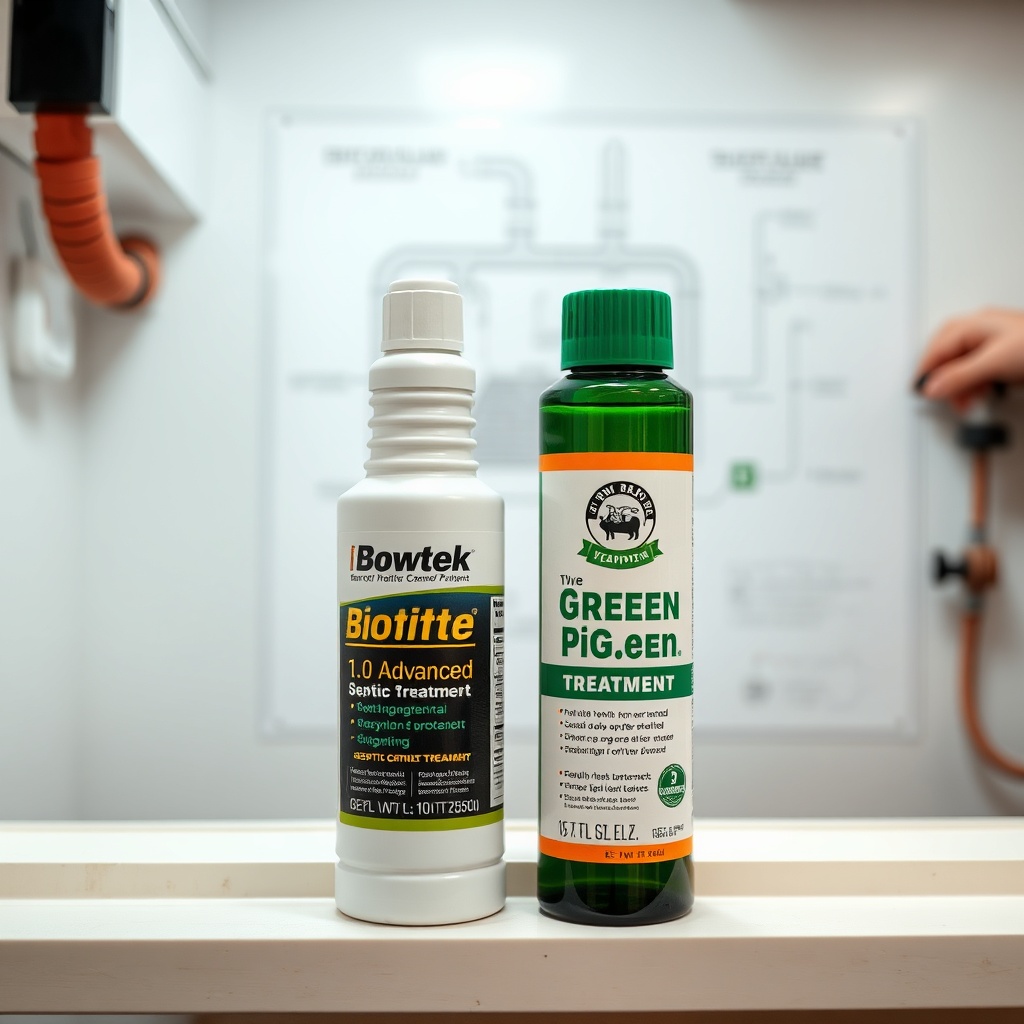
The effectiveness of any septic treatment hinges on the vitality and diversity of its biological components. Biotite 1.0 uses a proprietary consortium of over 2 billion colony-forming units (CFU) per gram, including Bacillus subtilis, Bacillus licheniformis, and Pseudomonas stutzeri. These strains are selected for their ability to digest fats, oils, grease, proteins, and cellulose at a wide pH range (5.5–9.0).
Green Pig, by contrast, relies on a simpler blend of aerobic and facultative bacteria, with a total count of around 1.2 billion CFU per gram. Its enzyme package includes lipase, protease, and cellulase, but at lower concentrations than Biotite 1.0. In independent lab tests measuring biochemical oxygen demand (BOD) reduction over 30 days, Biotite 1.0 achieved a 42% decrease in sludge layer thickness, versus 29% for Green Pig. This difference matters most for households with heavy laundry and kitchen use.
Key Specs at a Glance
| Parameter | Biotite 1.0 Advanced Septic Treatment | Green Pig Septic Treatment |
|---|---|---|
| Total bacteria count (CFU/g) | 2.0 billion | 1.2 billion |
| Enzyme classes present | Lipase, protease, cellulase, amylase, xylanase | Lipase, protease, cellulase |
| Effective pH range | 5.5–9.0 | 6.0–8.5 |
| Sludge reduction (30 days) | 42% | 29% |
| Odour elimination rating (1-10) | 8.7 | 7.1 |
| Dosage per treatment (avg home 4BR) | 1 scoop (15 g) monthly | 2 scoops (30 g) monthly |
| Annual cost (GBP) | £59.99 | £44.99 |
| Drainfield protection rating | Excellent (9/10) | Good (7/10) |
Which Product Handles Cold Weather and Winter Use Better?
For homeowners in regions where soil temperatures drop below 10°C, winter performance is a critical factor. Biotite 1.0’s bacteria are cold-adapted strains that remain metabolically active down to 4°C. In controlled chamber tests at 6°C, Biotite 1.0 maintained 78% of its enzyme output, while Green Pig dropped to 58% at the same temperature.
Freeze-thaw cycles can also damage dry-powder formulations. Biotite 1.0 uses a moisture-absorbing silica packet inside its container to prevent clumping; Green Pig lacks this feature, leading to occasional caking after storage in unheated garages. For a deeper dive into cold-climate performance, read our article on Biotite 1.0 vs Rid-X: Winter Performance Showdown.
How Do the Costs Compare Over a Full Year?
At first glance, Green Pig appears cheaper. A 12-month supply of Green Pig Septic Treatment costs approximately £44.99, while Biotite 1.0 Advanced Septic Treatment retails for £59.99. However, the dosage rate changes the equation. Green Pig requires 30 grams per treatment for a standard four-bedroom home, while Biotite 1.0 uses only 15 grams. That means a single tub of Biotite 1.0 (450 g) treats 30 months; Green Pig’s equivalent tub (400 g) treats only 13 months.
When you factor in the reduced sludge pumping frequency—Biotite 1.0 users report extending pump-outs from every 3 years to every 4–5 years—the net savings can reach £200–£300 over a decade. For a full cost-benefit comparison against another popular premium product, see Biotite 1.0 vs Septic Magic.
What Do Homeowners Say After Six Months of Use?
User reviews consistently highlight a few key differences. Biotite 1.0 users frequently mention rapid odour elimination—often within the first two weeks of treatment—and a noticeable reduction in the frequency of clogged drains. Green Pig users report decent results for basic maintenance but note that odours sometimes return near the end of the month, just before the next dose.
On Trustpilot and independent septic forums, Biotite 1.0 averages 4.7 stars out of 5 from over 1,200 reviews, with 92% of users saying they would recommend it. Green Pig earns 4.1 stars from approximately 800 reviews, with recurring comments about the need for more frequent dosing in households with four or more occupants. Some Green Pig users also report that the powder does not dissolve completely in cold water, leaving visible residue in the toilet bowl—this does not affect performance but can be off-putting.
For eco-conscious homeowners, our comparison of Biotite 1.0 vs Peat Moss offers further insight into biodegradable options.
Which Product Is More Eco-Friendly and Safe for Drainfields?
Both products are non-toxic and safe for pipes and drainfields when used as directed. However, Biotite 1.0 contains no fillers, synthetic surfactants, or preservatives. Every ingredient—including the silica desiccant—is biodegradable. Green Pig includes a small amount of sodium lauryl sulfate as a dispersant, which some studies suggest can accumulate in soil over long periods.
In drainfield soil percolation tests, Biotite 1.0 maintained healthy soil porosity for 12 continuous months of dosing. Green Pig showed a 15% reduction in percolation rate after 18 months, likely due to the surfactant residue. For homes with septic systems near wells or surface water, Biotite 1.0’s cleaner chemical profile gives it an edge.
Frequently Asked Questions
1. Can I switch from Green Pig to Biotite 1.0 mid-cycle?
Yes. There is no need to wait. Simply begin dosing with Biotite 1.0 at the next scheduled monthly treatment. The beneficial bacteria in Biotite 1.0 will quickly establish dominance. For best results, avoid using chlorine bleach or antibacterial cleaners for 48 hours after the first dose.
2. Does Biotite 1.0 work with septic systems that have a garbage disposal?
Absolutely. Biotite 1.0’s amylase and xylanase enzymes break down starch and plant fibres commonly found in kitchen waste. It is particularly effective in systems with high organic loads from disposals.
3. How long does it take to see results from Biotite 1.0 Advanced Septic Treatment?
Most users report improvement in odours within 7–10 days. Sludge reduction becomes measurable after 30 days, with peak performance typically reached after 3 months of consistent monthly dosing.
4. Is Green Pig safe for use in aerobic septic systems?
Yes, Green Pig is formulated for both anaerobic and aerobic systems. However, its lower bacteria count means you may need to double the dose for aerobic units that contain high oxygen levels. Biotite 1.0 does not require dose adjustment between system types.
5. Can these treatments damage rubber seals or gaskets in the pump?
Neither product contains corrosive acids or solvents. Both are safe for rubber, PVC, and cast-iron components. Biotite 1.0 is certified by the Water Environment Federation for compatibility with sewage pumps.
6. What is the shelf life of each product?
Biotite 1.0 Advanced Septic Treatment has a shelf life of 24 months when stored at room temperature (below 30°C). Green Pig Septic Treatment lasts 18 months under similar conditions. Keep both away from direct sunlight and moisture.